Physical Address
304 North Cardinal St.
Dorchester Center, MA 02124
Physical Address
304 North Cardinal St.
Dorchester Center, MA 02124

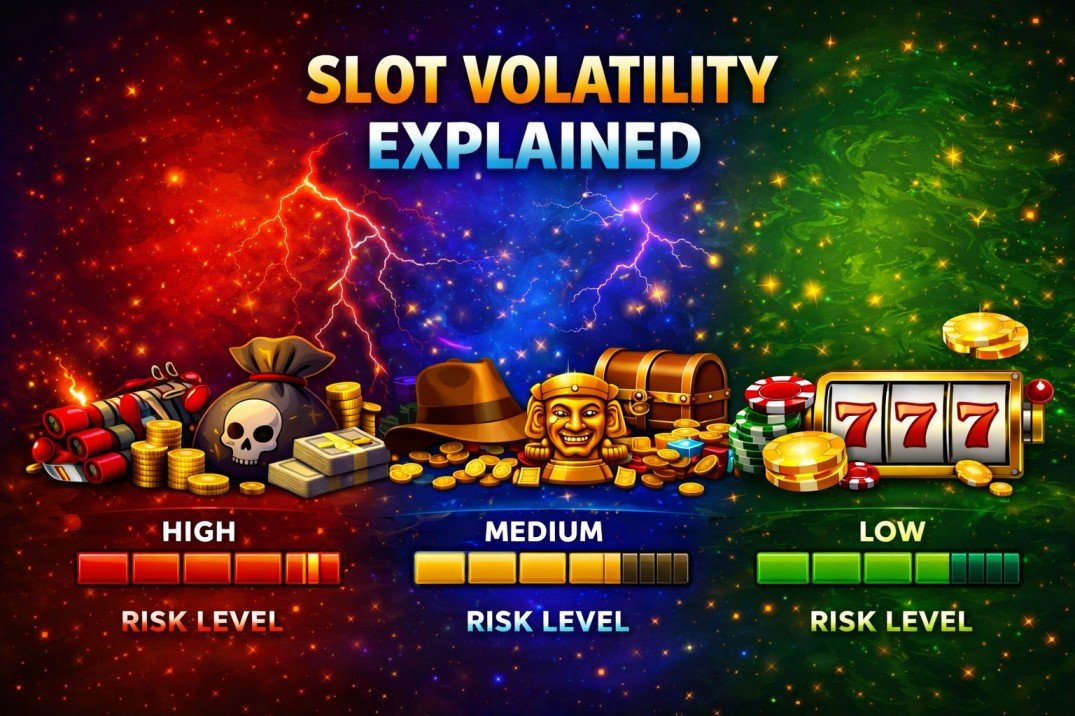
If you’ve ever played slots, you’ve probably noticed that some games pay small wins frequently while others seem quiet for long stretches before suddenly dropping a big payout. That difference isn’t random; it’s called volatility.
Slot volatility describes how a game distributes its payouts, specifically how often you win and how large those wins tend to be. Low-volatility slots usually deliver smaller prizes more often, creating steadier gameplay, while high-volatility slots produce rarer but potentially much larger payouts, along with longer losing streaks.
Understanding volatility matters because it directly affects your experience, how long your bankroll lasts, how risky a session feels, and whether a game suits your goals. Two slots with similar RTP can behave completely differently simply because their volatility is different.
In this guide, you’ll learn what slot volatility really means, the differences between high, medium, and low volatility games, how to identify it before you play, and how to choose the right type for your bankroll and play style.
Slot volatility (also called variance) describes how a slot pays out, specifically how often you win and how large those wins tend to be. It indicates whether a game delivers small frequent payouts or rare but potentially big prizes.
For example, a low-volatility slot might award many small wins that keep your balance fairly steady, while a high-volatility slot may produce long stretches with no wins followed by an occasional large payout that can dramatically boost your balance.
In simple terms, volatility tells you how risky a slot feels to play, not how much it pays overall.
Slot volatility determines the balance between how often a game pays and how large those payouts are. Understanding the differences helps you choose a slot that matches your risk tolerance, bankroll, and play style.
| Volatility Level | Win Frequency | Win Size | Risk Level | Bankroll Impact | Typical Player Experience |
|---|---|---|---|---|---|
| Low | Frequent | Small | Low | Balance declines slowly | Steady play with regular small wins, fewer dramatic swings |
| Medium | Moderate | Medium | Moderate | Balanced session length | Mix of quiet periods and meaningful wins, moderate excitement |
| High | Rare | Large | High | Balance can drop quickly | Long dry spells punctuated by occasional big payouts |
In simple terms, low volatility favors consistency, high volatility favors big-win potential, and medium volatility sits between the two.
Many slots display volatility using a visual scale or rating rather than technical details. This helps players quickly understand the game’s risk level before playing.
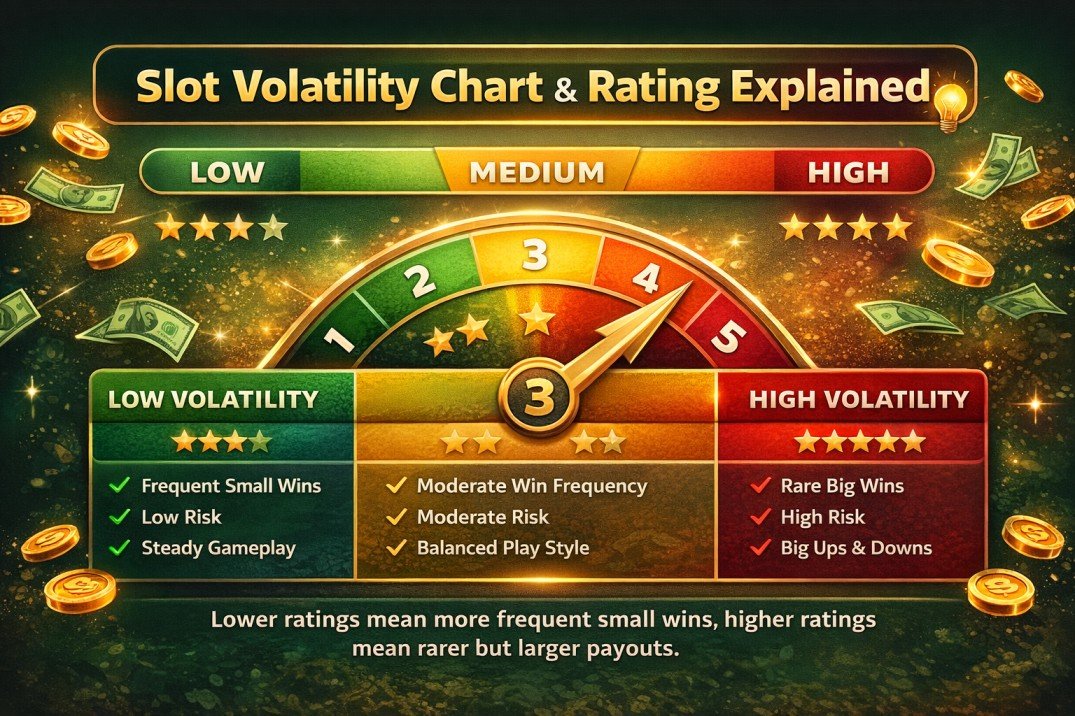
Most commonly, volatility is shown as a chart, meter, or score such as:
Lower scores represent steadier gameplay with frequent small wins, while higher scores indicate riskier games with rarer but larger payouts.
There is no universal standard for these ratings. Each game provider uses its own model based on payout distribution, bonus structure, and maximum win potential. As a result, a “4 out of 5” volatility slot from one developer may not behave exactly like a 4 out of 5 from another.
In simple terms, volatility charts are quick guidance tools, not precise measurements. They help you estimate how risky a slot will feel, but real gameplay can still vary due to randomness.
Volatility determines how your wins and losses are distributed during play, not the total payout over time.
High-volatility slots often have long losing streaks but offer the chance of large wins, which can drain your bankroll quickly unless a big payout occurs. Low-volatility slots produce smaller, more frequent wins that usually extend session length and slow balance decline.
This also affects the emotional experience: low volatility feels steady and predictable, while high volatility creates bigger swings between quiet periods and sudden large payouts.
In simple terms, volatility controls how risky a slot feels, how long your money may last, and how likely you are to experience big wins versus steady play.
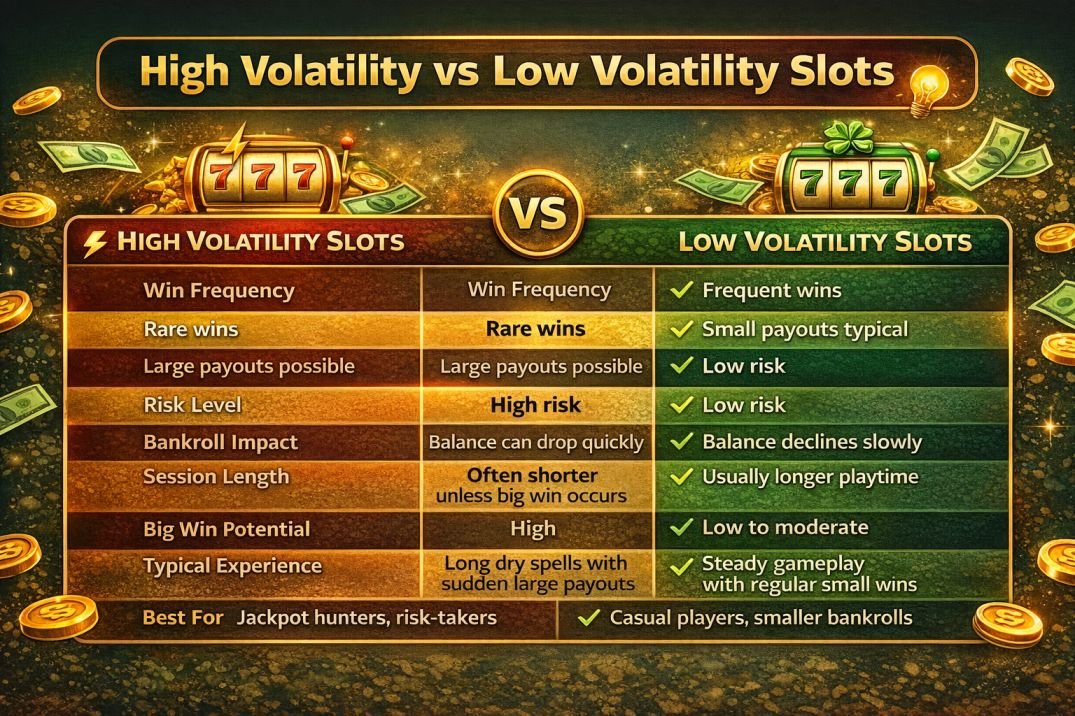
High-volatility and low-volatility slots behave very differently, even when their RTP is similar. The key difference is how often you win and how big those wins tend to be.
| Feature | High Volatility Slots | Low Volatility Slots |
|---|---|---|
| Win Frequency | Rare wins | Frequent wins |
| Win Size | Large payouts possible | Small payouts typical |
| Risk Level | High risk | Low risk |
| Bankroll Impact | Balance can drop quickly | Balance declines slowly |
| Session Length | Often shorter unless big win occurs | Usually longer playtime |
| Big Win Potential | High | Low to moderate |
| Typical Experience | Long dry spells with sudden large payouts | Steady gameplay with regular small wins |
| Best For | Jackpot hunters, risk-takers | Casual players, smaller bankrolls |
In simple terms, high volatility offers bigger rewards with higher risk, while low volatility offers steadier play with smaller but more frequent wins.
Low volatility is generally the safest choice for beginners because it delivers frequent small wins and reduces the risk of losing a bankroll quickly. This steady payout pattern helps new players stay in the game longer, understand how bonuses and features work, and avoid the frustration of long losing streaks.
High-volatility slots, while capable of large payouts, often involve extended dry spells that can drain a balance before any major win occurs. This can be discouraging for inexperienced players who are still learning how slot gameplay behaves.
Medium-volatility games can be a reasonable next step once you’re comfortable, offering a balance between consistent payouts and the chance of larger wins.
In practical terms, beginners benefit most from stability and playtime rather than jackpot potential, which makes low-volatility slots the most forgiving and accessible starting point.
High-volatility slots are designed to allow bigger payouts, so the potential to win large amounts is higher compared to low-volatility games. This is why they appeal to players chasing jackpots or life-changing wins.
However, this does not mean you will win more overall. Because wins are rare, many sessions can end in losses before a significant payout occurs. The larger prizes are funded by long periods with little or no returns, making results highly unpredictable in the short term.
In contrast, low-volatility slots return money more often but in smaller amounts, which can sometimes result in steadier outcomes even if the maximum win is lower.
In simple terms, high volatility increases big-win potential, not win probability.
Yes, progressive jackpots significantly increase a slot’s volatility. These games collect a small portion of each bet into a growing prize pool, which means most of the payout potential is concentrated in a rare, extremely large win.
As a result, regular payouts are often smaller or less frequent compared to non-progressive slots, and long losing streaks are more common. The chance of hitting the jackpot is very low, but the reward can be life-changing.
In simple terms, progressive jackpot slots are usually high volatility, trading steady returns for the possibility of a massive payout.
Volatility and RTP describe two completely different aspects of a slot, and confusing them leads to poor game choices.
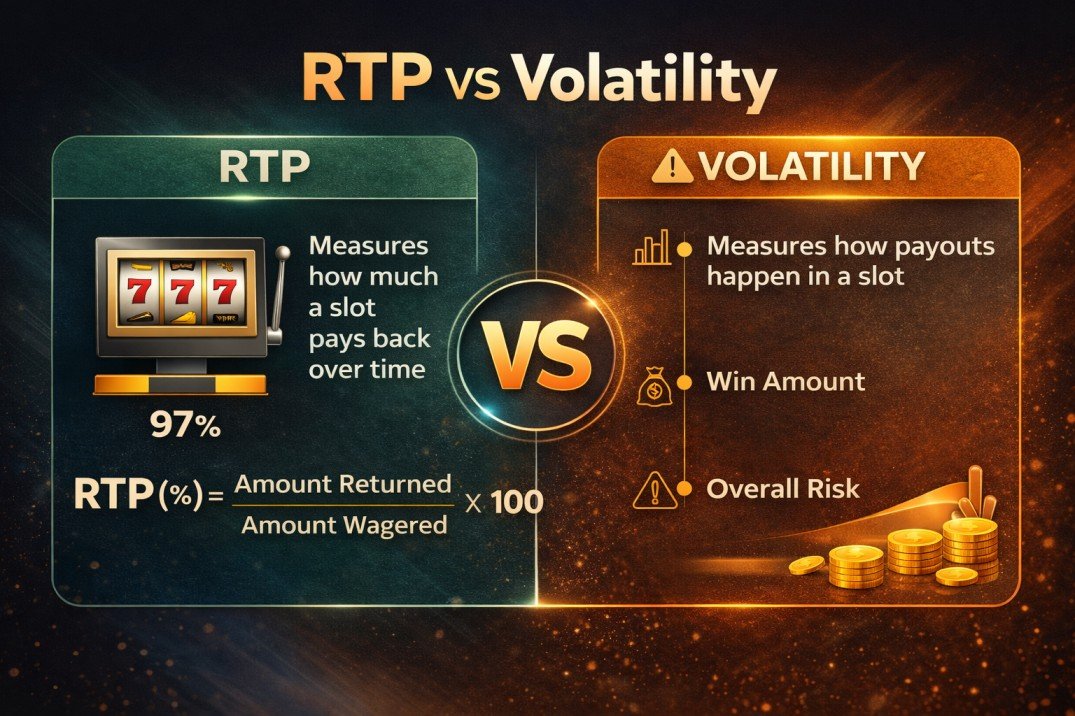
RTP (Return to Player) indicates how much money a slot is designed to return to players over the long term. It reflects overall value and expected loss over time.
Volatility, on the other hand, describes how that money is paid out — whether through frequent small wins or rare large payouts.
Two slots can have the same RTP but feel totally different to play. A high-volatility slot may return most of its payout through occasional big wins after long dry spells, while a low-volatility slot distributes the same total return through many small, steady wins.
In simple terms, RTP answers “how much,” while volatility answers “how often and how big.”
For a deeper explanation of RTP and how it affects your expected returns, see our guide on What Is RTP in Slots?
Volatility and hit frequency are related but not the same. Hit frequency simply measures how often a slot produces any winning spin, while volatility describes the size and distribution of those wins.
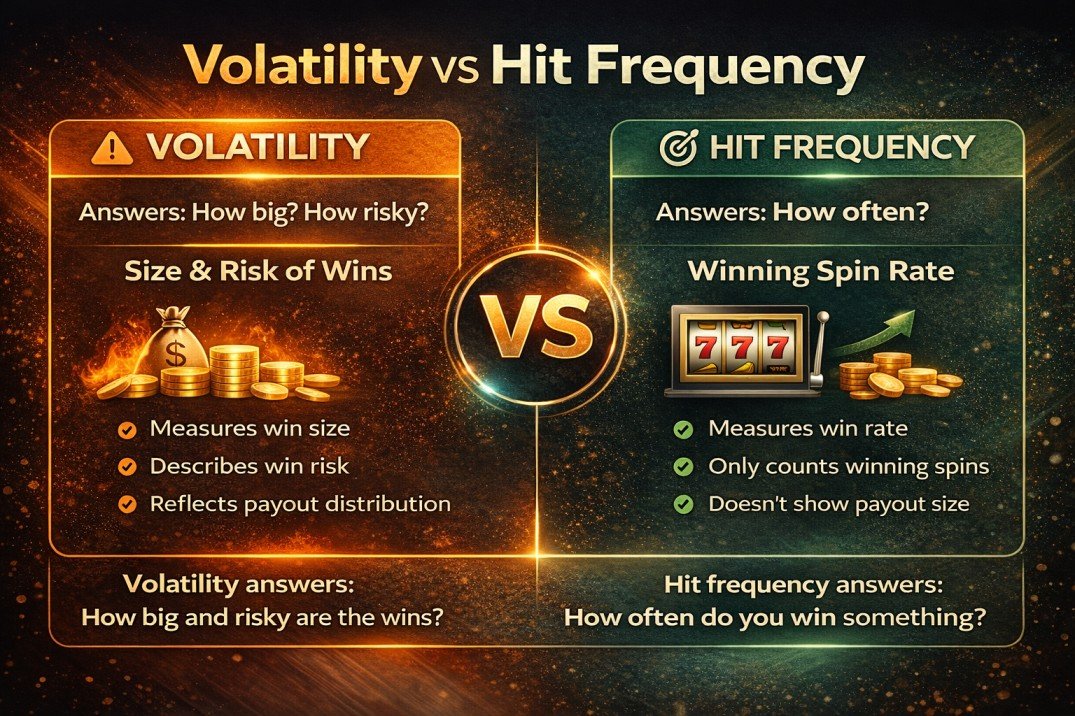
A slot can have a high hit frequency but still be high volatility if most wins are very small and occasional payouts are much larger. Conversely, a game with low hit frequency may still have medium volatility if wins, when they occur, are moderate rather than huge.
In simple terms, hit frequency answers “how often you win,” while volatility answers “how big and how risky those wins are.”
There is no universal formula for slot volatility. Game providers estimate it by analyzing payout distribution over many simulated spins, including how often wins occur, how large they are, and how extreme the swings can be.
Each developer uses its own models and thresholds, which is why volatility ratings can vary between providers.
In simple terms, volatility labels are guidelines based on win frequency and payout size patterns, not standardized measurements.
Most slots don’t display volatility clearly, but you can usually estimate it with a quick check.
If none of these sources provide clarity, treat the game cautiously, especially if you’re managing a limited bankroll.

High-volatility slots are designed to produce rare but potentially very large wins, often with long quiet periods between payouts. These games typically feature big multipliers, bonus rounds, or massive maximum win potential.
Popular examples include:
These slots are best suited for players with larger bankrolls or those specifically chasing big payouts, as long losing streaks are common.
In simple terms, high-volatility slots trade frequent wins for the chance of a major hit.
Medium-volatility slots aim to balance win frequency and payout size, offering a mix of regular returns and occasional larger wins. They are often preferred by players who want excitement without the extreme swings of high-volatility games.
Popular examples include:
These games suit players who want longer sessions than high-volatility slots but still want the possibility of meaningful payouts.
In simple terms, medium volatility offers a compromise between consistency and big-win potential.
Low-volatility slots are designed to produce frequent small wins, making them ideal for beginners, casual players, or anyone trying to stretch a limited bankroll. Large payouts are uncommon, but the steady flow of returns keeps gameplay smoother and less risky.
Popular examples include:
These games are best for players who prioritize playtime and stability over chasing large jackpots.
In simple terms, low-volatility slots favor consistency and longer sessions rather than big wins.
Online and land-based slots can feel very different in terms of volatility, even when both advertise similar payouts.
Online slots often provide a wider range of volatility levels because software developers design games for diverse play styles, from steady low-risk titles to extremely high-variance jackpot chasers. Volatility information is also more transparent online, frequently shown in game details or reviews.
Land-based machines, on the other hand, are typically configured for the casino floor environment. They may emphasize entertainment value, shorter sessions, or progressive jackpots, and exact volatility data is rarely disclosed to players. Settings can also vary by location and casino policy.
In simple terms, online slots usually offer more choice and clearer information about volatility, while land-based slots prioritize in-person play experience and may feel less predictable from a player’s perspective.
Volatility is widely misunderstood, and many players make decisions based on myths rather than how slots actually work.
High volatility always pays more.
High-volatility slots offer bigger potential wins, but they don’t guarantee higher overall returns. Long losing streaks are common, and many sessions may end without a major payout.
Low volatility can’t hit big.
Low-volatility games usually favor smaller wins, but large payouts are still possible. They’re simply less likely compared to high-volatility titles.
Volatility equals RTP.
These are completely different concepts. RTP measures long-term return, while volatility describes how wins are distributed. Two slots can share the same RTP but feel totally different to play.
More bets mean better results.
Increasing bet size raises both risk and reward proportionally, but it doesn’t change volatility or guarantee improved outcomes.
In simple terms, volatility shapes the style of payouts, not the fairness of the game or your chances of winning overall.
In simple terms, the best volatility is the one that fits your budget, risk tolerance, and what you want out of the session.
High volatility means the slot pays out less often but offers the potential for much larger wins when payouts occur. Long losing streaks are common between significant hits.
Low volatility is better for players who want steady gameplay and longer sessions, but it usually comes with smaller maximum wins compared to high-volatility games.
Low-volatility slots win most often because they are designed to deliver frequent small payouts rather than rare large ones.
Volatility does not change during play because it is built into the game design, although bonus rounds may temporarily increase payout size and risk.
You can find volatility in the game’s info panel, on the provider’s website, in reputable reviews, or by observing gameplay patterns such as win frequency and payout size.
Low volatility is considered the safest because it reduces the chance of long losing streaks and helps bankrolls last longer.