
If you’re new to online betting, gambling bonuses nd betting bonuses can feel reassuring. Free bets and welcome offers are often positioned as a way to get started with less risk, making early betting decisions feel lighter and more forgiving.
What isn’t always clear is how these bonuses subtly influence the way you bet. Instead of just giving you extra funds, they can change how long you stay active, how frequently you place bets, and how much risk you’re willing to take. Many new players only notice this shift once wagering requirements, time limits, or withdrawal conditions begin to matter.
This article looks at gambling bonuses from a behavioural point of view. It doesn’t assume bad intent, and it doesn’t offer strategies to “beat” the system. The goal is to help you understand why bonuses often increase risk for new players and why they can feel safer than they really are, especially at the start.
Why Gambling Bonuses Feel Safer Than They Actually Are
When you’re new to online betting, a bonus can make the experience feel lighter. Because the money doesn’t feel fully yours, losses often seem easier to accept. Placing another bet feels like a small step, not a serious decision.
These wagering rules often matter more than players expect, especially when bonuses are active.
This sense of safety shows up in simple ways. You might bet a little more than planned, try markets you don’t fully understand, or stay active longer just to keep things going. The bonus creates a cushion that lowers hesitation and makes betting feel more flexible than it really is.
Over time, this changes how decisions are made. Instead of pausing to think things through, bets are placed more quickly and more casually. For many new players, this shift happens gradually, without a clear moment where risk suddenly becomes obvious.
The issue isn’t that bonuses automatically cause losses. It’s that they reduce the natural caution most people have when betting with their own money, especially at the beginning, when habits are still forming.
How Wagering Requirements Quietly Increase Risk
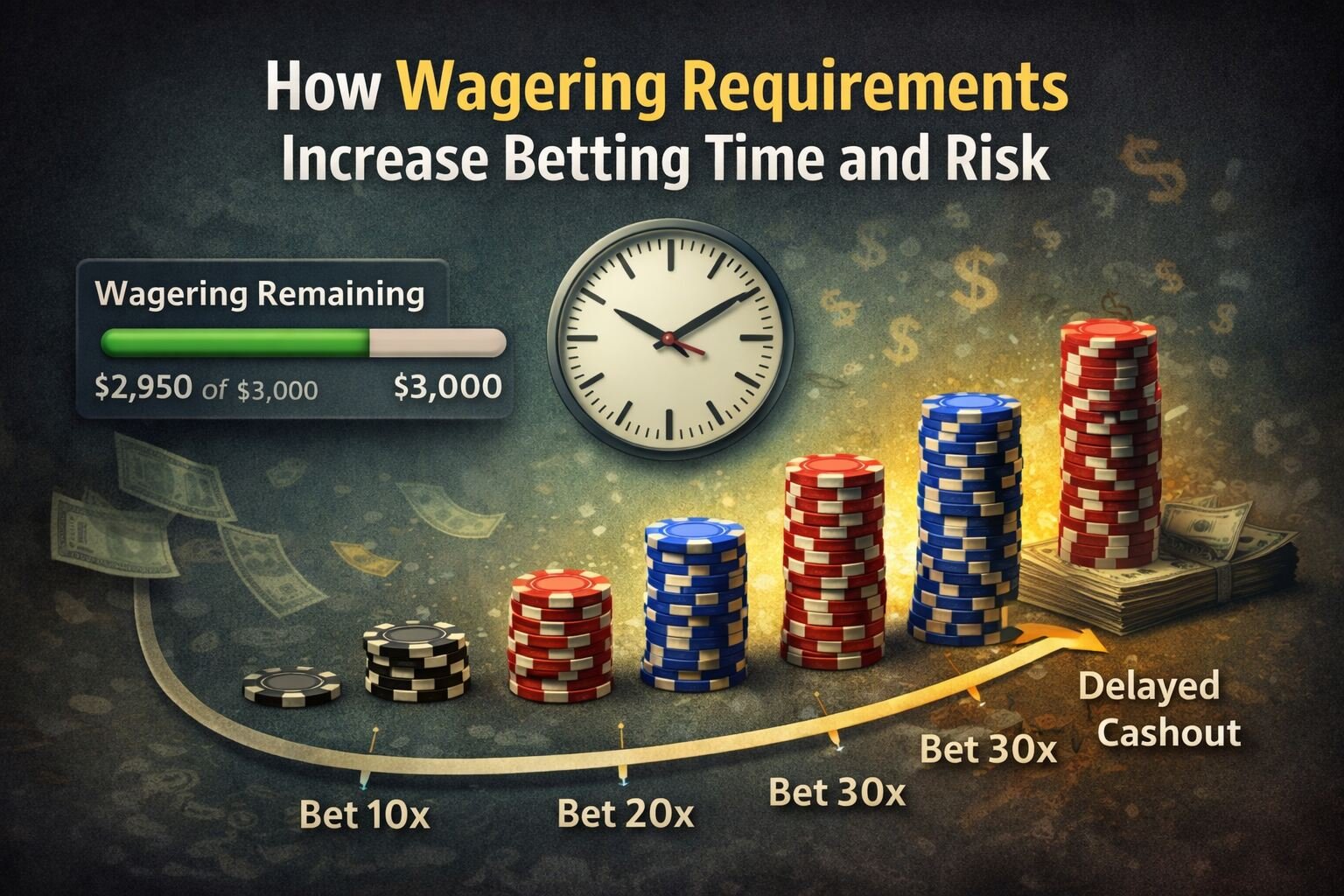
Wagering requirements are often explained as a technical detail, but their real impact is behavioural. At the start, a multiplier like 20x or 30x doesn’t feel urgent. It sounds distant, something to think about later.
As betting continues, that requirement slowly starts to shape decisions. Instead of betting only when something feels worth it, bets are placed to keep progress moving. The focus shifts from making good choices to completing the requirement, even if the bets themselves don’t feel particularly strong.
Time limits add another layer of pressure. Knowing there’s a deadline can encourage longer sessions and fewer breaks. Rather than stopping when interest or focus fades, players often continue betting simply because there’s still wagering left to clear.
The risk isn’t in the maths alone. It’s in how wagering requirements turn betting into a task that needs finishing. Once that mindset takes over, it becomes easier to bet more often, stay active longer, and accept risks that wouldn’t normally feel comfortable.
When Bonuses Push You Into Loss-Chasing
Loss-chasing usually doesn’t feel like a deliberate choice. When you’re betting with a bonus, losses often feel temporary, as if a few more bets will naturally even things out. As long as wagering requirements are still active, stopping can feel premature.
Instead of seeing a losing bet as a reason to pause, you may find yourself continuing to bet to recover what was just lost and to move closer to completing the bonus. The focus shifts away from whether a bet makes sense and towards keeping progress going.
This is where betting risk increases quietly, without feeling obvious at the time.
Time limits can add extra pressure. If there’s still wagering left to clear, taking a break can feel like wasting an opportunity. You may stay active longer than planned, placing bets simply to avoid letting the bonus expire.
The risk here isn’t one poor decision. It’s how bonuses make it easier to keep betting when you’d normally slow down or stop, gradually pulling you into a cycle that’s harder to step away from.
Why Betting Platforms Offer Bonuses in the First Place
It’s worth understanding that bonuses aren’t designed around individual outcomes. They’re built around patterns. Betting platforms know that when you start with extra funds, you’re more likely to stay active longer, place more bets, and return again.
From your side, a bonus may feel like a helpful starting push. From the platform’s side, it’s a way to reduce hesitation and increase engagement early on. Longer sessions and higher activity are more likely when wagering requirements are in play, even if individual bets don’t always feel well thought out.
This doesn’t mean online betting bonuses are dishonest or unusual. They’re a common part of how online betting works. The important thing is recognising that they’re structured to encourage participation, not to protect you from loss or guide better decision-making.
Once you see bonuses as engagement tools rather than safety features, it becomes easier to judge whether taking one actually fits how you want to bet, instead of assuming it lowers risk by default.
Research into gambling design shows that promotions and incentives can significantly influence betting behaviour, often increasing session length and risk-taking without players realising it.
“Bonus Abuse” vs What You Experience as a Regular Player
You’ll often see the term bonus abuse used by betting platforms, but it doesn’t usually mean what most players assume. From the platform’s perspective, bonus abuse refers to deliberate misuse, things like creating multiple accounts, hiding locations, or manipulating offers in ways that clearly break the rules.
What you’re more likely to experience as a regular player is different. Issues often come from misunderstanding terms, missing small conditions, or not realising how strictly bonuses are monitored. A withdrawal might be delayed, a bonus might be removed, or winnings might be voided, not because of fraud, but because something didn’t line up with the offer rules.
This gap creates frustration. You may feel penalised for behaviour that didn’t seem unreasonable at the time, while the platform sees it as enforcement of clearly stated terms. Understanding this difference matters, because it highlights how little room there is for error once a bonus is involved.
Bonuses add layers of conditions and checks that don’t exist when you’re betting with your own money. Knowing that upfront helps you decide whether the added complexity is worth it for you, rather than discovering it only when something goes wrong.
Who Gambling Bonuses Are Risky For
Gambling bonuses aren’t equally risky for everyone, but there are situations where taking one can work against you rather than help.
If you’re new to betting, bonuses can push you into decisions you haven’t learned to manage yet. Without a clear sense of odds, pacing, or limits, it’s easy to bet more often or for longer than you intended.
If you tend to bet emotionally, bonuses can make it harder to step back. Losses may feel less serious at first, encouraging you to keep going when it would normally make sense to pause.
Bonuses can also be risky if you’re betting to recover previous losses. Wagering requirements and time limits create pressure, which often leads to rushed decisions instead of careful ones.
In these situations, bonuses don’t reduce risk. They increase it by adding urgency, complexity, and extra incentives to keep betting when slowing down would usually be the safer choice.
What Gambling Bonuses Can and Cannot Do
Gambling bonuses are often misunderstood because they’re framed as a benefit rather than a trade-off. Used in the right context, they can add time and variety to a betting session. They can also help you become familiar with how a platform works, especially in the early stages.
What bonuses cannot do is reduce risk. They don’t improve your odds, protect you from losses, or make betting more predictable. Any money tied to a bonus still comes with conditions that shape how you bet, often requiring more activity and longer sessions than you would normally choose.
It also helps to be clear about expectations. Bonuses aren’t designed to create consistent profits or act as a safety buffer. Their value is limited to entertainment and learning, not financial protection.
Seeing bonuses for what they are, optional incentives with attached conditions, makes it easier to decide whether taking one fits your approach, rather than assuming it automatically works in your favour.
Final Thoughts: The Risk Isn’t the Bonus, It’s How It Changes Your Behaviour
Gambling bonuses don’t force bad decisions. What they do is quietly change the way you approach betting, especially at the beginning. They make it easier to bet longer, take chances you might normally avoid, and continue when it would usually make sense to stop.
For new players, this shift often happens before there’s a clear understanding of wagering requirements, time limits, or withdrawal conditions. By the time those details matter, betting habits may already be harder to control.
Seeing bonuses as engagement tools rather than safety nets helps you make more deliberate choices. When you understand how they influence behaviour, you’re in a better position to decide whether taking a bonus actually supports the way you want to bet, or whether it adds pressure you’d rather avoid.
FAQs About Gambling Bonuses
Are bonus bets worth it for beginners?
Bonus bets are usually not ideal for beginners. While they look helpful at first, they often encourage longer sessions and quicker decisions before you’ve developed a sense of pacing, limits, or risk. For many new players, betting with their own money provides clearer feedback and better control.
What’s the catch with gambling bonuses?
The catch is rarely hidden, but it’s often underestimated. Most bonuses come with wagering requirements, time limits, and specific rules that affect how you can bet and withdraw winnings. These conditions tend to increase activity rather than reduce risk.
What happens if I don’t meet wagering requirements?
If wagering requirements aren’t met, any remaining bonus funds and related winnings are usually removed. This can happen even if you’ve won bets, which is why many players only realise the impact of wagering rules when trying to withdraw. Bonus wagering requirements must be completed before withdrawals are allowed.
Do I risk my own money when using a bonus?
Yes. While the bonus itself may not be withdrawable, bets placed to meet wagering requirements often involve your own deposited funds. Losses during this process can affect your balance, especially if betting continues longer than planned.
Why do gambling bonuses feel safer than they are?
Bonuses feel safer because they reduce the emotional impact of early losses. When money doesn’t feel fully yours, it’s easier to take risks and keep betting. This psychological effect is what often increases risk over time, not the bonus amount itself.