

You place a $50 bet at 2.40 odds and the app shows a $120 payout.
Looks good. But how much of that is actually profit?
This is where a lot of bettors get confused. Sportsbooks usually display total return, not profit. That number includes your original stake, unless you’re using a free bet or bonus credit where the stake isn’t returned at all.
Add in same-game parlays, boosted odds, bonus tokens, or refund offers, and the payout math can quickly feel unclear. Sometimes the number looks bigger than it really is. Sometimes it’s lower than you expected.
Understanding total return in sports betting means knowing:
- When your stake is included
- When it isn’t
- How profit is calculated
- How free bets change the formula
- Why parlay payouts multiply the way they do
In this guide, we’ll break it down clearly, with real examples. And if you want to check any wager instantly, you can use our Betting Return Calculator to see both total payout and actual profit before placing your bet.
What Is Total Return in Sports Betting?
Total return in sports betting is the full payout you receive from a winning bet, including your original stake unless the wager was placed with a free bet or bonus credit where the stake is not returned.
Formula (Decimal Odds)
Total Return = Stake × Odds
Quick Example
$50 at 2.40 odds:
50 × 2.40 = $120 total return
That includes your $50 stake. Profit is $70.
Does Total Return Include the Stake?
Short answer: Yes for cash bets. No for most free bets and bonus credits.
Here’s how it works:
- Cash bets → Stake included. When you win a regular wager placed with your own money, the total return includes your original stake plus profit.
- Free bets → Stake not returned. You keep only the profit. The promotional stake disappears.
- Bonus tokens → Usually not returned. Most sportsbook bonus credits work like free bets unless terms say otherwise.
- Boosted bets → Stake included. Unless the boost is tied to a bonus token, your original stake is returned with winnings.
Most modern sportsbooks display total payout by default, not profit. That bigger number is what you see first, which is why understanding whether your stake is included matters.
Total Return vs Profit – Why Sportsbooks Show Bigger Numbers
Total return and profit are not the same thing, but sportsbooks often make them look similar.
Return Formula (Decimal Odds):
Total Return = Stake × Odds
Profit Formula:
Profit = (Stake × Odds) − Stake
Example:
$50 at 2.40 odds = $120 total return
Actual profit = $70
The reason apps highlight total payout is simple. The bigger number looks more attractive. Most betting apps show projected payout first and profit second, or hide profit inside a small breakdown.
Same-game parlay builders amplify this effect. As you add more legs, the projected payout climbs fast, sometimes dramatically. The interface focuses on the final payout figure, not the actual profit or risk.
If you’re unsure whether your stake is included, our Betting Return Calculator breaks down both profit and total payout clearly.
Quick Betting Return Formulas (Bookmark This Section)
Here are the core formulas every bettor should know:
- Total Return (Decimal Odds) = Stake × Odds
- Profit (Cash Bet) = (Stake × Odds) − Stake
- Free Bet Profit = Stake × (Odds − 1)
- Parlay Odds = Multiply All Leg Odds
These formulas apply across most sportsbooks using decimal odds and make it easier to verify whether the payout shown matches what you should actually receive.
How Free Bets and Bonus Credits Change the Math
Free bets and bonus credits don’t behave like normal cash wagers. That’s where most payout confusion starts.
Stake Not Returned on Most Promo Bets
With a standard free bet, your stake is not returned. You only keep the profit.
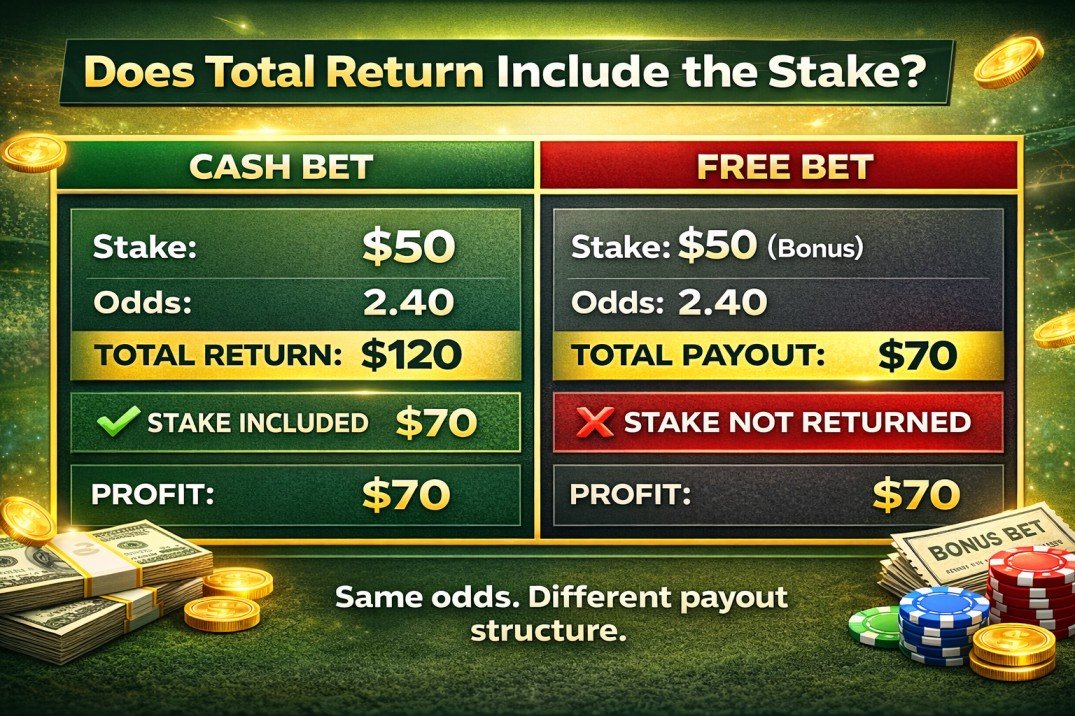
Free Bet Profit Formula:
Profit = Stake × (Odds − 1)
Example:
$20 free bet at 3.00 odds
Profit = 20 × (3 − 1) = $40
You receive $40, not $60.
Switch your bet type inside our Betting Return Calculator to see the exact difference between cash and bonus payouts.
Minimum Odds Requirements
Most free bets require you to bet at specific minimum odds. If you go below that threshold, the promo may not qualify.
Winnings Caps
Some sportsbooks cap maximum winnings on bonus bets, meaning even if the math shows a larger payout, you might receive less.
Bet & Get Offers
These promotions require placing a qualifying cash bet first before receiving bonus credit. The qualifying bet usually returns stake normally. The bonus bet does not.
Refund-as-Bonus Models
“Bet and get refund if you lose” offers typically return your stake as bonus credit, not cash. That refunded bonus then follows the stake-not-returned rule.
Understanding which type of promo you’re using matters. The payout structure changes the math completely.
Parlay & Same-Game Parlay Return Calculation
Parlays increase potential payouts because the odds of each leg are multiplied together. But the math behind them is slightly different from single bets, especially with same-game parlays.
Odds Multiplication
For a standard parlay using decimal odds:
Combined Odds = Leg 1 × Leg 2 × Leg 3 (and so on)
Example:
2.00 × 1.80 × 2.50 = 9.00 combined odds
If you stake $50 at 9.00 odds:
Total Return = 50 × 9.00 = $450
That’s why parlay payouts grow quickly. The multiplication compounds the risk and reward.
Same-Game Parlay Correlation Adjustments
Same-game parlays are slightly different. Sportsbooks adjust combined odds when selections are correlated.
For example:
- Quarterback passing yards
- Wide receiver receiving yards
- Team total points
These outcomes are connected, so the sportsbook reduces the combined price compared to multiplying standalone odds. The displayed payout already reflects this adjustment.
Boost Tokens Applied to Combined Odds
When you apply a parlay boost token, the boost usually increases the final combined odds, not each individual leg.
Example:
Combined odds = 6.00
20% boost → adjusted odds = 7.20
The stake is typically returned as normal unless the boost is tied to a bonus credit.
What Happens If One Leg Pushes?
If one leg pushes (for example, a point spread lands exactly on the line), that leg is removed from the parlay.
The remaining legs are recalculated at their original odds. Your payout will be lower because one multiplier is removed.
Live Dynamic Odds Changes
In live betting, odds can shift between adding legs to a parlay. The final payout reflects the confirmed odds at the time you place the bet, not when you first selected the leg.
Because of multiplication and adjustments, parlay returns can be harder to estimate manually. That’s why many bettors prefer calculating the exact payout before confirming the wager.
Why Your Betting Return Looks Different Than Expected
If your payout looks lower or higher than you calculated, there’s usually a clear reason. Modern sportsbooks apply specific rules that change the final number.
Stake Not Returned
If you used a free bet or bonus credit, your original stake is not included in the payout. Only the profit is paid. This is the most common source of confusion.
Max Win Caps on Promos
Some promotional bets include a maximum winnings cap. Even if the calculated return is higher, the sportsbook may limit how much you can actually receive.
Cashout Before Settlement
If you cash out early, the payout reflects the live odds at that moment, not the original projected return. Early cashout almost always reduces potential profit.
Rounding Differences
American odds conversions and decimal rounding can slightly adjust the final payout. Small rounding differences become noticeable on larger stakes or multi-leg parlays.
Voided or Partially Settled Bets
If one leg of a parlay is voided, it’s removed and the bet recalculates with the remaining selections. This lowers the total return because one multiplier disappears.
Boost Limits
Odds boosts often have maximum stake limits or capped profit increases. If your stake exceeds the promo limit, only part of it may qualify for the boost.
What Is ROI in Sports Betting (And Why Smart Bettors Track It)
Total return tells you what you won on a single bet.
ROI, or Return on Investment, tells you how profitable you are overall.
ROI Formula
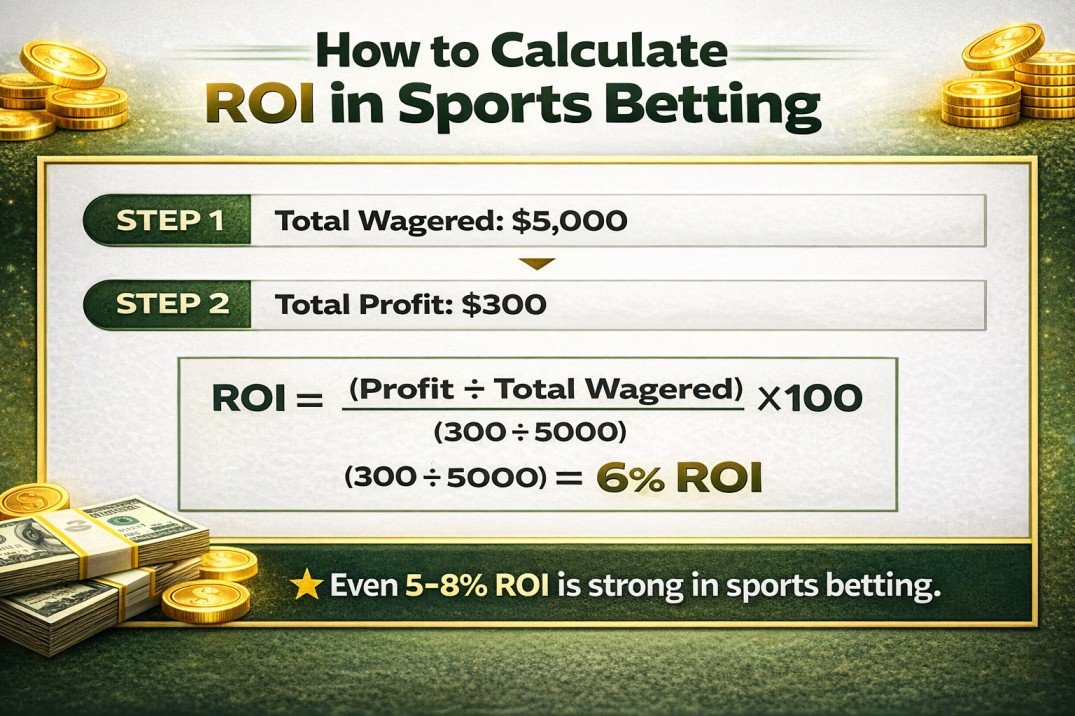
ROI = (Total Profit ÷ Total Amount Wagered) × 100
Example:
If you wager $5,000 over time and make $300 profit:
ROI = (300 ÷ 5000) × 100 = 6%
That 6% is what serious bettors care about.
Why Win Rate Doesn’t Equal Profit
You can win 60% of your bets and still lose money if:
- You’re betting heavy favourites at low odds
- You’re risking more on certain plays
- You’re hitting small wins but missing large stakes
Win percentage alone doesn’t measure efficiency. ROI does.
Why 5–8% ROI Is Strong
In sports betting, even a 5% long-term ROI is considered solid. Anything consistently above that is strong performance. Margins are tight because sportsbooks build their pricing around built-in edges.
Understanding how sportsbooks price odds involves built-in margins, often referred to as vig or juice, which directly affect long-term profitability.
You can read more about this concept on Wikipedia’s explanation of vigorish.
Why Long Parlays Usually Reduce ROI
Parlays offer large payouts, but they multiply risk. One missed leg wipes out the entire bet. While occasional hits feel significant, frequent losses often lower long-term ROI.
That’s why experienced bettors focus more on sustainable edge than chasing headline payouts.
Betting Return Calculator – How to Use It Properly
If you want to check your numbers before placing a bet, a payout calculator makes it straightforward.
Enter Your Stake
Input the exact amount you plan to wager. Even small changes in stake will change the total return and profit.
Choose the Correct Odds Format
Select decimal, American, or fractional odds to match your sportsbook. Using the wrong format will give the wrong payout.
Toggle Free Bet Mode
If you’re using a free bet or bonus credit, switch the bet type. This removes the stake from the final payout and shows profit only.
Calculate Parlay Returns
For multi-leg bets, enter the combined odds. The calculator will display both total payout and actual profit.
Compare Profit vs Total Payout
Always check both figures. Total payout includes your stake. Profit shows what you actually win.
Avoid Common Calculation Mistakes
- Forgetting that free bet stakes are not returned
- Mixing up odds formats
- Ignoring maximum win caps
- Confusing payout with profit
Try the Betting Return Calculator now and compare cash vs bonus payouts before placing your next bet.
FAQ
What does total return mean in sports betting?
Total return in sports betting is the full payout from a winning bet, including your original stake unless the wager was placed with a free bet or bonus credit where the stake is not returned.
Does betting return include my stake?
Betting return includes your stake on cash bets. It does not include the stake on most free bets or bonus credits, where only the profit is paid out.
How do I calculate profit from a free bet?
To calculate profit from a free bet, use: Stake × (Odds − 1). The stake is not returned, so you receive only the profit portion of the wager.
How are parlay returns calculated?
Parlay returns are calculated by multiplying all leg odds together to get combined odds, then multiplying that figure by your stake to determine total return.
Why is my free bet payout lower than expected?
Free bet payouts are lower because the stake is not returned. You only receive the profit. Some promos also include minimum odds rules or maximum winnings caps.
What is the formula for betting payout?
The betting payout formula using decimal odds is: Stake × Odds. To find profit, subtract your original stake from the total return.