
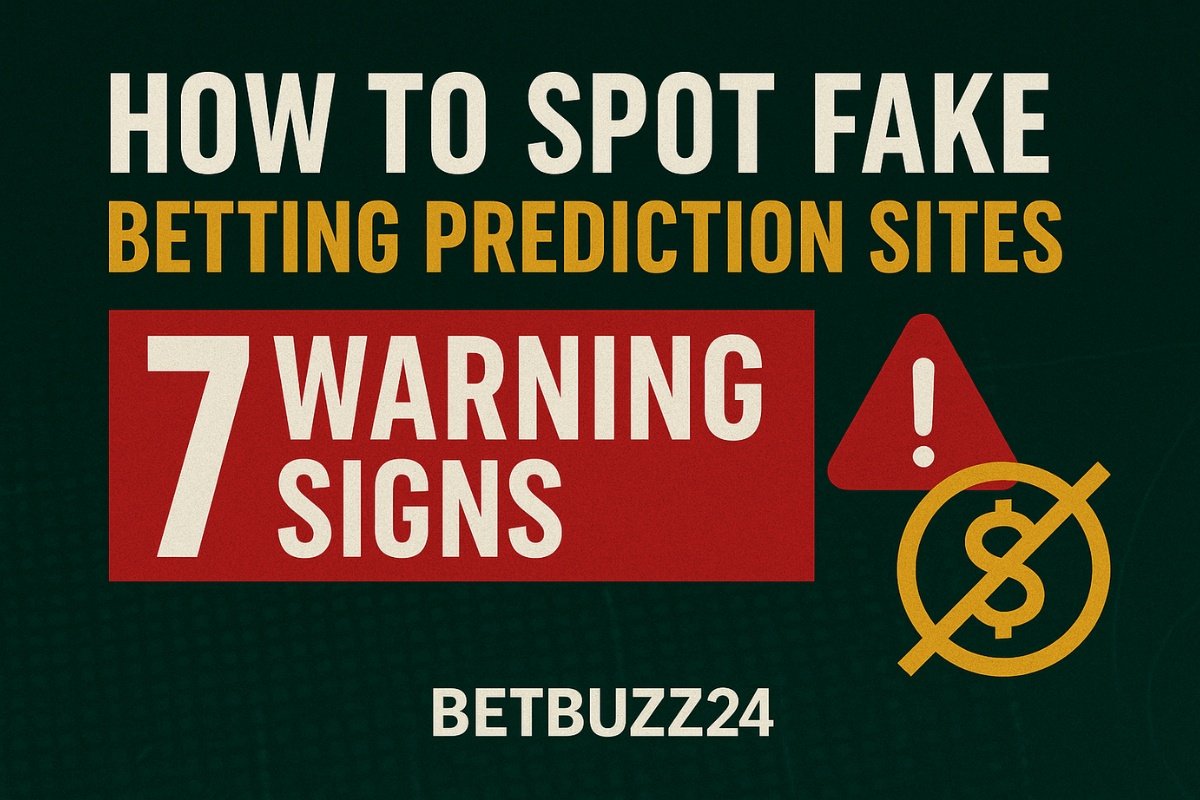
Fake betting prediction sites are far more common than most people realise.
Many present themselves as professional platforms, using confident language, screenshots of supposed winnings, and promises of unusually high accuracy. In reality, these sites rely on psychological pressure, selective information, and unverifiable claims rather than genuine analysis.
This article explains how fake betting prediction sites typically operate, the warning signs they share, and how they differ from legitimate data or analysis platforms. It does not promote betting strategies or recommend prediction services.
If a site promises guaranteed results, urges immediate payment, or avoids transparency, this guide will help you understand why those signals matter before any money is lost.
What Is a Fake Betting Prediction Site?
A fake betting prediction site is a platform that claims to predict betting outcomes with certainty or near-certainty, usually in exchange for payment or “VIP access.” These sites often present themselves as expert tipsters, insiders, or guaranteed systems, but provide no verifiable way to confirm their claims.
Unlike legitimate data or analysis platforms, fake prediction sites avoid transparency. They rarely show complete prediction histories, remove losing tips, or rely on vague screenshots instead of traceable match details. The goal is not analysis, but persuasion.
It’s important to distinguish these sites from statistics or simulation platforms. Tools that display historical data, probabilities, or allow mock betting with fake money are not automatically scams. A site becomes problematic when it promises certainty, hides evidence, or pressures users to pay based on unprovable results.
Why Fake Betting Prediction Sites Are So Convincing
Fake betting prediction sites rarely rely on technical tricks. They rely on human psychology.
Loss recovery thinking
After a few losing bets, people are more open to anything that promises control or certainty. Fake sites exploit this by positioning themselves as a solution to recent losses rather than as neutral sources of information.
Authority framing
Many fake platforms present themselves as “experts,” “insiders,” or “professional analysts” without showing real credentials. Confident language and technical-sounding terms can create a false sense of credibility.
Manipulated social proof
Testimonials, chat screenshots, and group messages usually show only winning outcomes. Losses are hidden, deleted, or never shared, which creates the illusion that success is common and consistent.
Urgency and pressure tactics
Countdown timers, limited-time “VIP access,” or claims that a tip is about to expire are used to push quick decisions. Urgency reduces the chance that users will pause and verify claims.
Understanding these patterns helps explain why fake prediction sites work and makes it easier to recognise when persuasion is being used instead of transparency.
Common Warning Signs of Fake Betting Prediction Sites
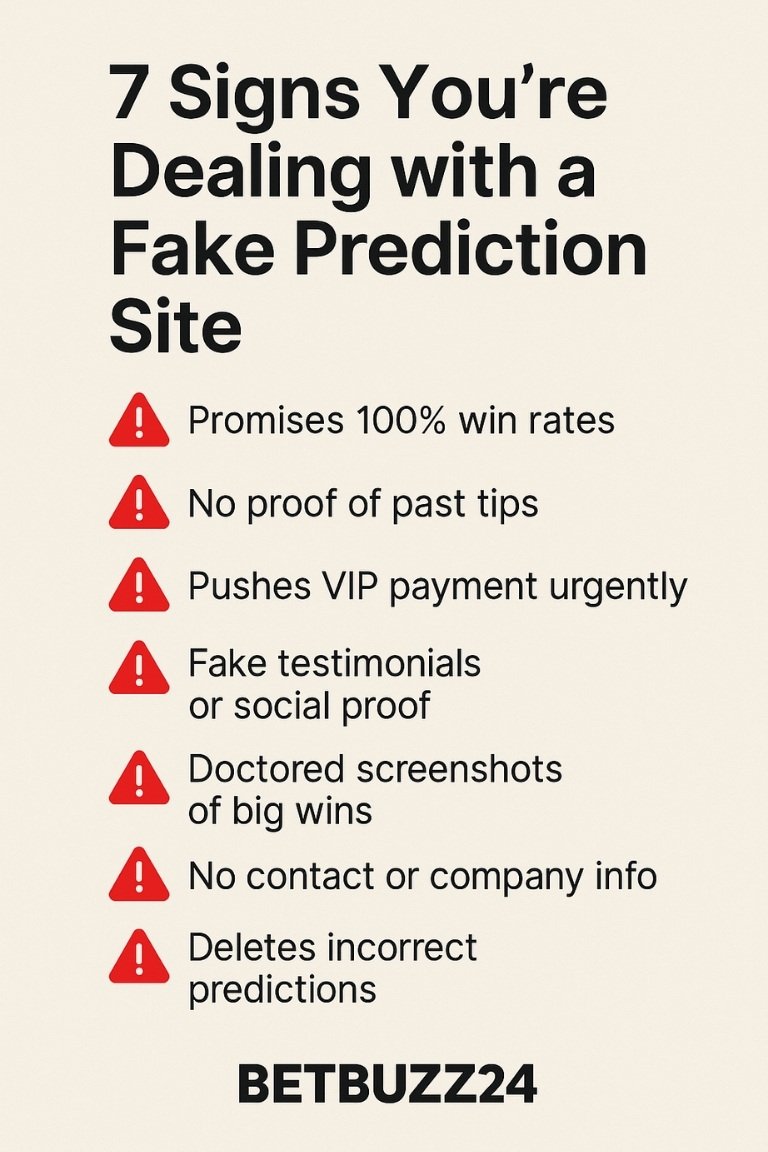
Fake betting prediction sites tend to follow repeatable patterns. One warning sign alone may not be conclusive, but several together usually indicate a scam.
Guaranteed or Near-Perfect Win Claims
Claims such as “100% accuracy,” “sure wins,” or “never lose” are the clearest red flags. Football outcomes are unpredictable, and any site promising certainty is misleading by design.
No Verifiable Prediction History
Fake sites avoid showing complete past records. They often post isolated “wins” without match links, timestamps, odds, or bookmaker references, making verification impossible.
Pressure to Pay Immediately
Countdown timers, messages about “limited VIP slots,” or claims that access is closing soon are used to rush decisions. Legitimate platforms do not rely on urgency to justify value.
Screenshots Without Context
Images of betting slips or account balances without bet IDs, odds, or traceable details are easy to fabricate. Reused or heavily cropped screenshots are common in scams.
Lack of Clear Business Information
Missing contact details, no company background, and the absence of pages like terms or privacy policies are strong warning signs. Transparency is a basic requirement.
Predictions Edited or Removed After Events Start
Some sites delete losing tips or modify posts after matches begin, leaving only winning predictions visible. This creates a false impression of consistent success.
Operating Only Through Messaging Apps
Scam prediction services often exist only on Telegram or WhatsApp, with no permanent website or searchable archive. Frequent account or channel name changes add further risk.
How Fake Betting Prediction Scams Usually Play Out
Most fake betting prediction scams follow a similar pattern. Recognising it early makes it easier to stop before money is lost.
They often appear after a losing streak, when users are more open to promises of control or recovery. A few recent “wins” or free tips are shown to build confidence, usually through screenshots or selective posts that cannot be verified.
Once interest is shown, payment is framed as the next step. Access is described as VIP, premium, or insider-only, and urgency is introduced to discourage verification. If paid tips fail, losses are explained away, recovery is promised, or additional payment is requested. Eventually, posts are deleted, accounts go quiet, or the operation reappears under a new name.
Real-World Red Flags in Practice
Pressure to pay immediately
Messages about limited slots or expiring access are used to rush decisions. Legitimate platforms do not rely on urgency.
Unverifiable screenshots
Betting slips without odds, bet IDs, or bookmaker references prove nothing. Reused or cropped images are common.
Disappearing predictions
Losing tips are removed or edited after matches begin, leaving only winning posts visible. This creates a false performance record.
Why This Matters
Fake prediction sites succeed by limiting time for verification and presenting selective evidence. If urgency replaces transparency, walking away is safer than waiting for confirmation.
Fake Prediction Sites vs Mock Betting Platforms
Fake betting prediction sites are often confused with mock or simulation platforms, but they are not the same thing.
Fake prediction sites claim to help users win real money. They promote certainty, sell tips or access, and rely on unverifiable results. Money changes hands, and the risk is financial loss.
Mock betting platforms, on the other hand, use fake money. They simulate betting environments for learning, entertainment, or testing strategies. No real funds are involved, and there are no promises of profit. These platforms are not scams by default, even though the word “fake” is often used loosely to describe them.
The key difference is intent.
If a platform:
- asks for payment to access predictions,
- promises results with real-money implications, or
- discourages verification,
it should be treated with caution.
If a platform:
- clearly states that bets are simulated,
- uses fake balances for practice, and
- does not claim real-world outcomes,
it is functioning as a learning or demo tool, not a prediction service.
Understanding this distinction helps avoid false alarms while keeping focus on platforms that pose real financial risk.
What to Do If You’ve Been Scammed by a Fake Betting Site
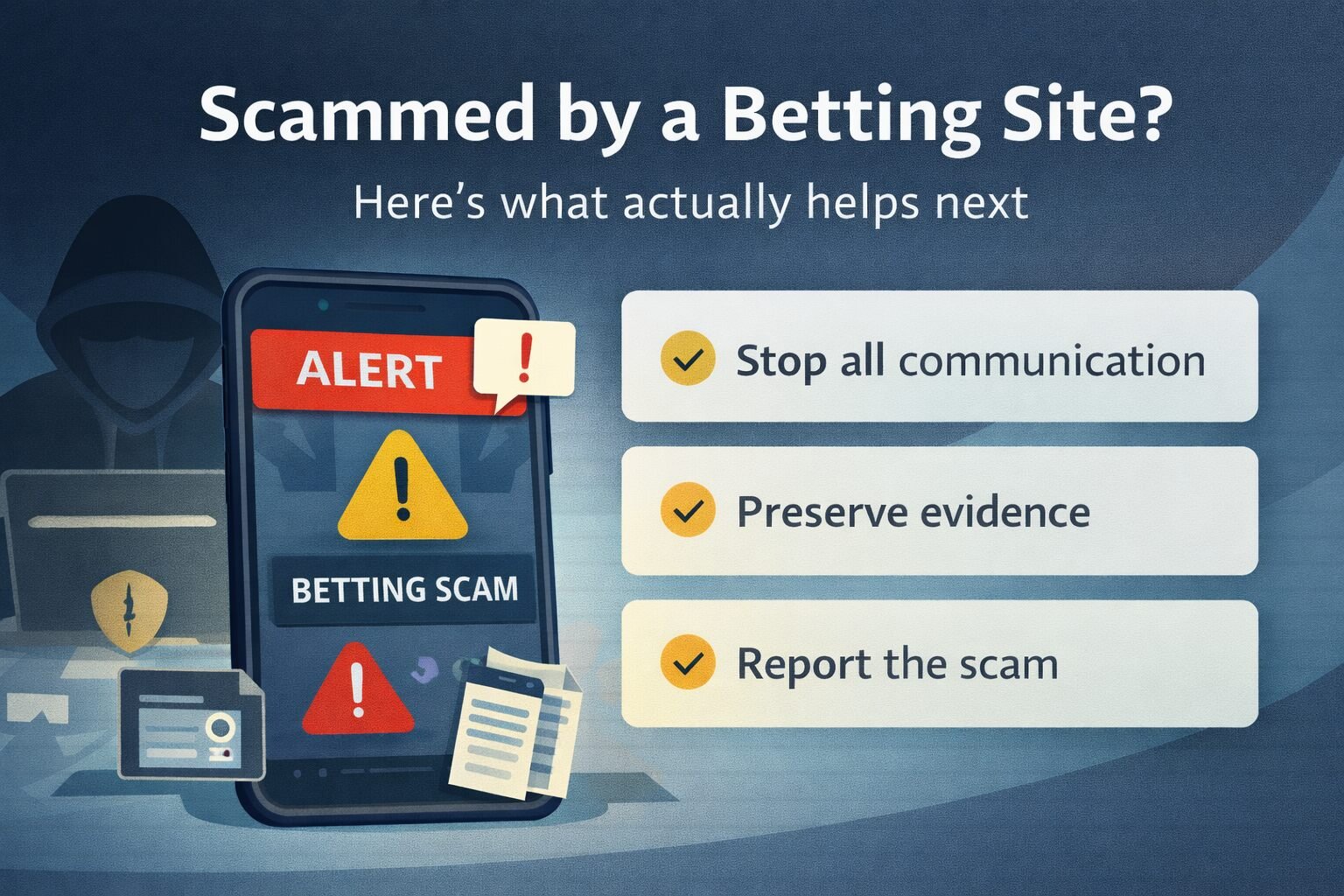
If you’ve already paid a fake betting prediction site, the most important thing is to stop the situation from getting worse. Recovery is often difficult, but there are still steps worth taking.
Stop all communication
Do not engage further, even if the site promises to recover losses or offers a “special” follow-up tip. Secondary payments are a common tactic.
Preserve evidence
Save screenshots of messages, payment receipts, URLs, usernames, and any promises made. This information matters if you report the scam.
Report the platform
- Report websites through Google Safe Browsing
- Report Telegram or WhatsApp accounts through their in-app reporting tools
- If money was lost, consider reporting to your local cybercrime or consumer protection authority
Avoid recovery scams
Be cautious of anyone claiming they can retrieve lost funds for a fee. These are often follow-up scams targeting the same victims.
Take a pause before betting again
Losses linked to scams often trigger emotional decisions. Stepping back helps prevent repeating the same pattern elsewhere.
While refunds are uncommon, reporting scams helps reduce future harm and protects other users.
Why Reporting Fake Betting Prediction Sites Matters
Reporting fake betting prediction sites helps limit how far scams spread, even when individual losses cannot be recovered.
When users report websites, social media pages, or messaging channels, platforms are more likely to remove them or restrict their reach. This disrupts patterns scammers rely on, such as rapidly creating new groups and recycling the same content under different names.
Reports also improve detection systems. Search engines, app stores, and messaging platforms use repeated reports to identify common scam behaviours, which can prevent similar sites from appearing in the future.
Most importantly, reporting protects other users. Fake prediction sites succeed because they reach people at vulnerable moments. Even a single report can reduce exposure and stop someone else from losing money to the same operation.
Report scam websites to Google Safe Browsing
Who Is Most at Risk of Fake Betting Prediction Scams
Fake betting prediction scams do not target careless people. They target situations.
Users are more vulnerable when they are new to betting and lack a reference point for what realistic analysis looks like. Inexperience makes it harder to recognise exaggerated claims or missing information.
Risk also increases after a losing period. Losses can create urgency and a desire to regain control quickly, which makes confident promises more persuasive and verification less likely.
People who rely heavily on social proof are another common target. Testimonials, group chats, and visible “wins” can feel reassuring, even when they are selectively presented or fabricated.
Finally, users who engage primarily through messaging apps without checking for a permanent website, history, or contact details face higher risk. Limited transparency makes it easier for scammers to disappear and reappear under new names.
Awareness of these risk moments helps shift focus from finding better tips to making safer decisions.
Bottom Line – Spotting Fake Betting Prediction Sites
Fake betting prediction sites rely on certainty, urgency, and selective evidence, not real analysis.
No platform can consistently predict betting outcomes, and any site that promises guaranteed results, pressures payment, or hides its history should be avoided. Transparency, verifiable records, and the absence of urgency matter far more than confident claims.
When something feels rushed or too certain, walking away is usually the safest decision.
FAQs – Fake Betting Prediction Sites
How can I spot a fake betting prediction site?
Fake sites often promise guaranteed wins, hide past losses, pressure users to pay quickly, and rely on unverifiable screenshots. A lack of transparency or contact information is another common warning sign.
Are there legitimate betting prediction websites?
Some platforms provide statistics, probabilities, or match analysis, but they do not guarantee outcomes. Legitimate sites explain their limits and avoid certainty-based claims.
Do “99% sure” betting tips exist?
No. Phrases like “99% sure” or “100% accuracy” are marketing language. Football outcomes are unpredictable, and such claims should be treated as red flags.
Are mock betting sites scams?
Not necessarily. Mock or simulation betting sites use fake money for practice or learning. They become problematic only if they claim real-world profits or charge for guaranteed results.
Can money lost to a fake betting site be recovered?
Recovery is uncommon, especially if payment was made through crypto or untraceable methods. Reporting the scam and stopping further communication is usually the best course of action.