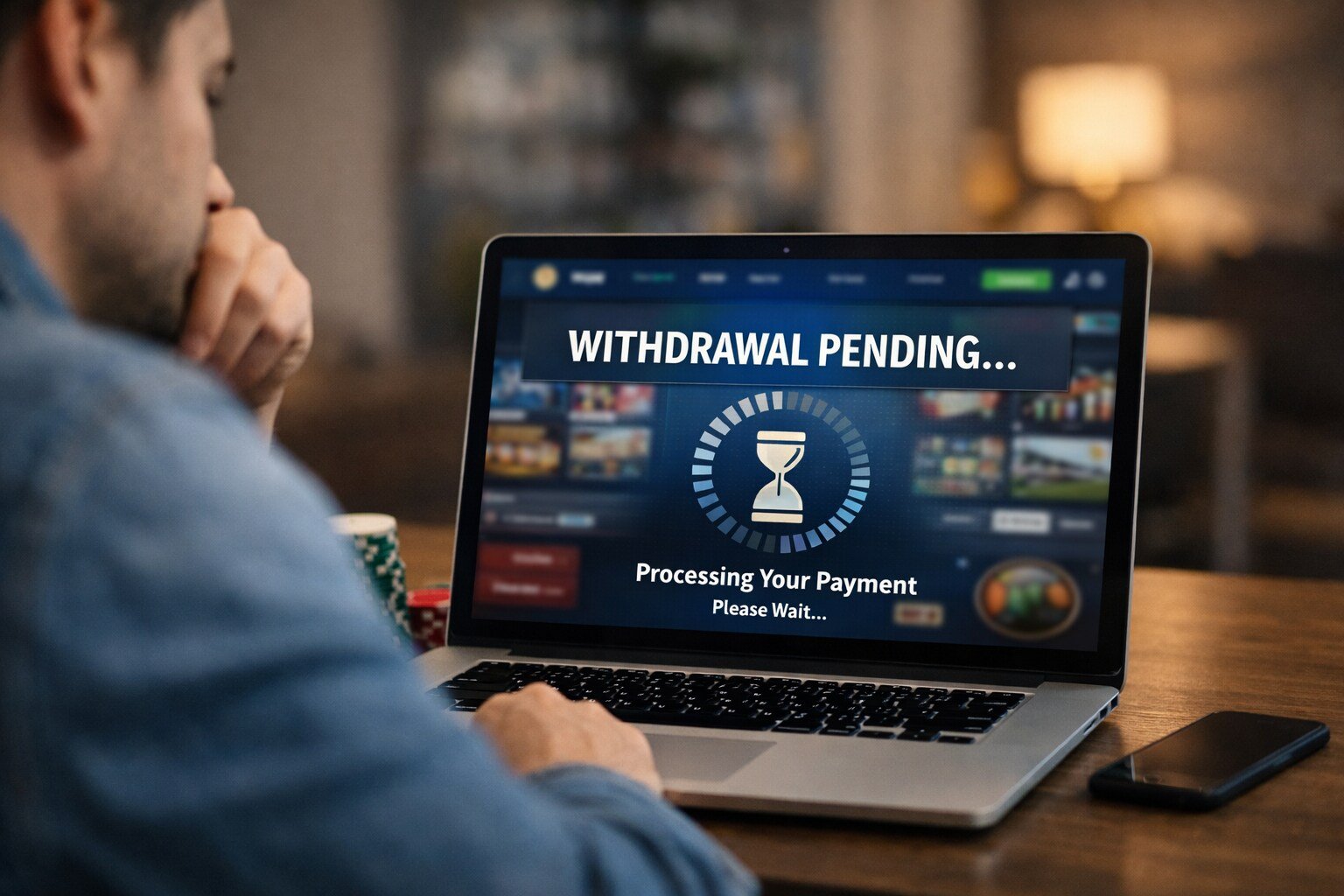
You sign up on a casino that looks legitimate, play without issues, win, and request a withdrawal.
Then the status stays on pending.
That’s usually when doubt starts. Is this normal? Did you miss something? Or is the site not as trustworthy as it seemed?
The reality is simple. Withdrawal delays happen even on licensed, well-known platforms. Not because casinos refuse to pay, but because withdrawals go through extra checks and processing steps that deposits never do.
This article explains why casino withdrawals get delayed, what actually happens after you click withdraw, and how to tell the difference between a normal delay and a real problem. No scare tactics, no promotion, just a clear look at what’s going on while you wait.
Clicking withdraw does not send your money straight to your bank or wallet. It starts a behind-the-scenes process that takes time, even on legitimate platforms.
Here’s what usually happens, step by step.
1. The withdrawal request is logged
Your balance is locked so it can’t be played again. The money hasn’t moved yet, it’s just marked as pending.
2. Internal processing begins
The casino system checks account status, recent activity, and basic details. This step alone can take several hours.
3. Compliance checks may be triggered
Some withdrawals pass automatically. Others are flagged for review, especially first withdrawals or larger amounts.
4. Manual review (when required)
If a flag appears, a human review happens. This is common and doesn’t mean something is wrong.
5. Payment is released to the provider
Only after approval does the casino send the money to your bank, wallet, or crypto network.
6. Final delivery is out of the casino’s control
Once sent, timing depends on the payment method, not the casino.
Most withdrawal delays happen before the money is ever sent out. That’s why a request can stay pending even when the platform is playing by the rules.
Not all withdrawal delays mean the same thing. Most confusion starts because two very different stages get treated as one.
This happens while the withdrawal is still inside the casino system. The money has not left the platform yet.
Common reasons include:
During this stage, support usually cannot speed things up because the request is still under review.
This starts only after the casino has approved the withdrawal and sent the money out.
Common reasons include:
At this point, delays are often outside the casino’s direct control.
If the withdrawal is still processing, waiting is usually normal.
If it has been approved but not received, the delay is often with the payment provider.
Understanding which stage you’re in helps you decide whether patience is needed or further action makes sense.
First withdrawals almost always move slower than later ones. This catches many players off guard, especially when everything else on the site has worked smoothly.
When you withdraw for the first time, the casino hasn’t seen how your account behaves yet. This is when identity details, activity patterns, and payment information get their first real review.
Even on legitimate platforms, this step is rarely skipped.
Once a casino successfully pays a withdrawal, your account moves into a lower-risk category. Future withdrawals often face fewer checks because the platform already knows you.
That’s why second or third withdrawals usually feel faster.
Many casinos allow you to play before full verification is required. The real checks often begin only when you try to take money out.
This makes the first withdrawal feel delayed, even though the review was always going to happen.
As long as:
A slower first withdrawal is common and not a red flag on its own.
Many withdrawal delays are not caused by big problems. They’re triggered by small details players don’t realise matter.
Logging in from different locations, using a VPN, or switching devices around the time of withdrawal can trigger extra checks. The system needs to be sure the account hasn’t been accessed by someone else.
Minor mismatches in name spelling, address format, or date of birth can pause a withdrawal. Even small inconsistencies may require manual confirmation.
Withdrawing immediately after a bonus clears can slow things down. Some systems need time to update rollover status before a payout can be approved.
Submitting documents, changing payment methods, or updating account details while a withdrawal is pending can push the request back into review.
In most cases, the withdrawal isn’t denied. It’s simply paused until the system or review team confirms everything lines up.
These are the kinds of delays that feel personal but are usually procedural.
Most casinos use “fast payout” to describe what happens after approval, not the full withdrawal process.
Reviews, verification, and compliance checks happen first, and those steps are rarely instant.
Fast payouts usually apply to:
Marketing rarely mentions these conditions. So when a withdrawal takes longer, it feels misleading, even though the claim often only covers the final payment step.
Yes, but not as much as most people expect.
Banks follow fixed processing windows. Even after approval, transfers can take a few business days, especially around weekends.
These are often faster than banks, but still depend on the wallet’s own checks and schedules. They’re quick, not instant.
Crypto can be fast once sent, but approval still comes first. Network congestion and confirmation times can also slow things down.
Account review status, verification, and approval timing usually affect speed more than the payment option itself.
Changing methods rarely fixes a delay and often makes it worse.
Larger withdrawals usually get more attention. This happens even on legitimate platforms.
Big payouts stand out in the system. They often trigger extra checks to confirm the win, review recent activity, and meet anti-fraud and payment rules. This is routine, not personal.
Smaller, regular withdrawals tend to pass faster because they don’t cross review thresholds.
A longer wait after a big win doesn’t automatically mean trouble. It usually means the platform is being cautious before releasing a higher amount.
These status labels look simple, but each one points to a different stage.
Your withdrawal request has been received, but nothing has been approved yet. The money is locked, not sent.
Checks are happening. This can include account review, bonus confirmation, or compliance checks. Most delays happen here.
The casino has released the payment. From this point on, delivery depends on the payment method, not the casino.
Seeing a status change is usually a good sign. A request that stays active but doesn’t move is more common than one that disappears.
During a withdrawal, support agents usually don’t control the process. They can see the status, but they can’t override reviews or speed up payments.
That’s why replies often sound repetitive or generic. Agents rely on standard responses until the review team or payment provider finishes their part.
This doesn’t always mean support is avoiding you. In many cases, they’re waiting on updates the same way you are.
Legitimate casinos follow internal approval rules that aren’t shown to players. When a withdrawal slows down without explanation, it’s often because one of these rules has been triggered, not because there’s a problem with the payout.
Common triggers include:
Many of these checks are automatic. The system flags the withdrawal and places it into review until everything lines up. From the player’s side, this simply appears as a delay, which is why it often feels confusing or personal when it usually isn’t.
Even when a bonus looks cleared, it can still affect withdrawal timing. Some systems need extra time to update rollover completion or double-check bonus conditions before approving a payout.
Delays often happen when:
These checks don’t mean your bonus wasn’t cleared. They’re meant to confirm everything is settled before money is released, which can slow withdrawals unexpectedly.
Weekend withdrawal delays are usually caused by timing, not account issues. Most casinos rely on banks, payment processors, and review teams that operate on business-day schedules. When a withdrawal is approved late on a Friday, it often sits in a queue until regular processing resumes.
Banks rarely process transfers on weekends, and many payment processors run limited cycles during this time. On top of that, compliance and payment teams are often smaller outside normal working days. As a result, even legitimate withdrawals that would move quickly during the week can take longer when requested over the weekend.
When a withdrawal is delayed, it’s easy to panic and start clicking around. Unfortunately, some common reactions actually make the delay longer.
Avoid these mistakes while a withdrawal is pending:
Most systems treat these actions as changes that need re-verification. The safest option is usually to wait, respond only if support asks for something specific, and keep the request unchanged until it moves forward.
Not all accounts move through withdrawals at the same speed. This usually has less to do with luck and more to do with account history.
Players who have been on a platform longer and have completed successful withdrawals in the past are often seen as lower risk. Their requests pass through fewer checks because the system already knows how the account behaves.
Newer accounts, first-time withdrawals, or accounts that suddenly change activity patterns tend to face more review. This isn’t favoritism and it’s not personal. It’s simply how platforms reduce payment risk over time.
Faster payouts usually come from consistency, not special treatment.
Where you live can quietly affect how fast a withdrawal moves, even on the same casino platform.
Casinos often use different payment processors for different regions. Some countries have faster banking systems or more supported wallets, while others involve extra checks or slower settlement times. This can change how long a withdrawal takes, even if everything else is identical.
Local regulations also play a role. In some regions, platforms are required to run additional verification or reporting steps before releasing funds. These checks happen in the background, but they can add time to the process.
This is why two players using the same casino can have very different withdrawal experiences, simply based on location.
When a withdrawal is delayed, it doesn’t just sit forgotten. Legitimate casinos track these requests through internal systems.
Each delayed withdrawal is usually attached to a case or reference number. It moves through a review queue where checks are logged, updated, and passed between teams if needed. This can include compliance, payments, or fraud review, depending on why the delay started.
If a withdrawal takes longer than expected, it’s often because it’s waiting its turn in this queue, not because it’s being ignored. From the outside, this process isn’t visible, which is why delays can feel unclear even when they’re actively being handled.
Before assuming the worst, it helps to pause and check a few basics. Many withdrawal delays come down to small, fixable details.
Ask yourself:
If everything above checks out and the withdrawal is still active, the delay is usually part of normal processing. If several of these points are unclear, that’s often where the slowdown is coming from.
Most casino reviews focus on games, bonuses, and payouts on paper. They rarely explain what happens when a withdrawal slows down because that part doesn’t fit neatly into promotional content.
Many reviews are written to push sign-ups, not to prepare players for real-world friction. Talking openly about delays, reviews, and internal checks can reduce conversions, so those details often get skipped.
This is why players feel blindsided when a withdrawal takes longer than expected. The information exists, it’s just usually left out. BetBuzz24 includes it because understanding the process matters more than selling the promise.
Waiting for a withdrawal is stressful, especially when money feels stuck. But delays alone don’t mean a casino is refusing to pay or acting unfairly.
Most slowdowns come from reviews, payment systems, or timing issues that happen even on legitimate platforms. The key is knowing what’s normal, watching for real warning signs, and avoiding actions that make delays worse.
When you understand why withdrawals slow down, it’s easier to stay calm, ask the right questions, and know when patience makes sense and when caution is justified.
If you want to win at sports betting long term, you need more than predictions.…
Parlays look exciting because they promise something simple and powerful: turn a small stake into…
If you’ve ever opened two sportsbooks and seen 2.40, 7/5, and +140 for the exact…
Hedge betting is placing a second bet against your original wager to reduce risk or…
A betting unit is a standardized way to measure your bet size using a percentage…
A value bet in sports betting is a wager where the probability of an outcome…
This website uses cookies.